Responses to entries 1, 2 and 3: http://bmaninder.blogspot.co.nz/2015/06/entry-one-two-and-three_70.html?showComment=1434927018025
http://michellekoria.blogspot.co.nz/2015/06/task-one-part-1.html#comment-formhttp://nokileti.blogspot.co.nz
Sunday, 21 June 2015

Sunday, 14 June 2015
Group Blog Project
Evaluate how ICT is used
at your centre to promote children's learning and development.
Information and communication technology can be defined as any form of
technology that is used for sharing information (Ministry of Education, 2012). Some
examples of Information and communication technology that is used at my centre
are the use of laptops, computers printers; email, fax machine, internet,
digital camera and telephones.
However the predominant ICT tools the teachers use in the Montessori
setting are the use of laptops. Each teacher has their own individual laptop
and they use this during their non contact times writing children’s portfolios,
emailing or using facebook to correspond to parents about children work, and
interests. Through this correspondence parents and whanau are also welcome to
contribute their thoughts and perspectives on how their children’s learning can
be extended in school and vice versa (Ministry of Education, 1996). However
some parents are quite busy at work and often they do not respond back to the
teachers which sometimes causes frustration by the parents. Further more there
are some parents who come from the pacific and operating ICT tools is a
challenge.
The administrator and the head teacher’s role is to inform and update
parents on what is happening at the centre and most communication is done via
email. The communication with families and whanau sometimes includes planning,
upcoming events, children interests and how can it be supported, excursions,
festival celebration’s, and other cultural events. Teachers also use mobile phones to call or text
parents and whanau if there is need that is urgent or to simply communicate how
their child is doing, or what is expected from the parents. An example of the
expectation is parents taking turns to do the laundry each week.

The development of information and communication technology (ICT) has opened up new opportunities to share information with families and whanau in different and exciting ways.
Telephone is another means to communicate and it is present in all the rooms. This makes it easier for teachers to communicate to the parents if their child day is going well or if their child is not feeling well.
Benefits of ICT
to children learning and development.
There are various ways children benefit from the use of ICT at the
centre. It encourage creativity in
children seeing their world in different views, it encourage communication and
participation in the centre and makes learning more interesting for the tamariki.
Sometimes we use video clips from YouTube to extend their learning and
I found children thoroughly enjoyed it.
Researches indicate that ICT can provide opportunities for children to
develop skills and attitudes such as communication, collaboration exploration
and reflection, literacy including visual, digital technological and
information literacy. Furthermore it
develops relationship skills necessary for effective participation which will
benefits not only in the classroom but also to their future lives (Stephen, & Plowman, 2013).
My next step is
to verbally update parents when they drop their kids in the morning and when
they pick them after school consistently on what is happening at the centre,
and to remind them to check their news letter that has been sent through their
respective email or facebook. For those parents that find it a challenge to use
ICT tool to also remind them consistently and also print out a copy of the
newsletter for them to take home.
Entry 2 Entry Two
Evaluate how digital
devices are used at your centre to promote children's learning and development.
Children
at Montessori do not use any digital device or any technological device for
their own amusement, play or exploration directly. Only teachers use digital
devices such as computers, laptops, radio, and camera to extend on children’s
learning. For example, children have
been interested in insects and bugs lately, the teachers usethe laptop which is
connected to the sever to show children about a particular insect children are
interested in such as butterflies. Using you-tube video clip from the internet
to show children the butterflies and its life cycle from caterpillar to pupa
and when they turn into beautiful butterfly.
Teacher also uses the camera, which is
the predominant digital device in the centre. Camera’s are used to take photos or short videos
regarding children’s learning and experiences daily. These photos are included
in children’s portfolios and sometimes sent to parents email with consent
before publishing.

My Head
teacher who is a fully trained Montessori mentioned that digital experiences
shouldn’t take the place of real hands on activities and there is nothing that
digital technology can offer to better this. As a head teacher she tries to
limit children’s exposure to technology because she wants the children to
interact with the real world first when children are under her care. Teachers
ensures that if digital technology is used it should be accompanied by teacher
supervision and ensure that it promotes their learning (Stephen, C., &
Plowman, L. 2013).
Stephen
& Plowman (2013) also mentioned that there are worries that screen based digital
technologies are used as a babysitting tool which denies children adult
company, along with anxieties about addiction, physical inactivity, passivity
and lack of verbal and social development. However if used is should be
meaningful and purposeful for the teachers and children.
For
example there are few Asian children attending our centre and they can’t speak
any English at all. So the teachers use the Internet to download some of the
children cultural language to use to reach out to these children. These are simple
words like washing hands, come here, sit down and so forth. Digital technologies allow teachers to find
culturally and linguistically appropriate words, activities, music, and stories
for every child when there may be no other ways to obtain these resources
(Uchikoshi 2006; Nemeth 2008; as cited in National Association for the
Education of young children, 2012).
Benefits of using
digital devices in children’s learning.
The
use of digital devices in my centre significantly influences on the children
learning and development. The use of cameras particularly in capturing children’s
photos or video recording children’s learning has been the most effective tool
in documenting children’s learning and parents likes to see visually what their
child is capable of doing when in the centre. Parents, whānau also enjoy seeing their children visual
representation of what they have been learning in preschool and also gives them
the motivation to give feedback and contribute on children’s learning and
development (Ministry of education, 2005)
When
children look through their own photos it reminds them of their own learning
and development. Arthur, Beecher, Death, Dockett & Farmer (2008) support
the use of photographs because its an effective learning strategies that shows
children learning and development.
Next
step is to ask my head teacher if children can be given the opportunity to take
photos of anything that interests them and print the photos using the printer for their own learning. Camera is a concrete
resource and children are able to manipulate it in ways that it can be
meaningful for them. Using digital tools helps children to locate, evaluate,
manipulate, manage, create and communicate information from different sources
(Ministry of Education, 2005).
Entry 3: Evaluate how
non-ICT/digital tools or devices are used at your centre to promote children's
learning and development.
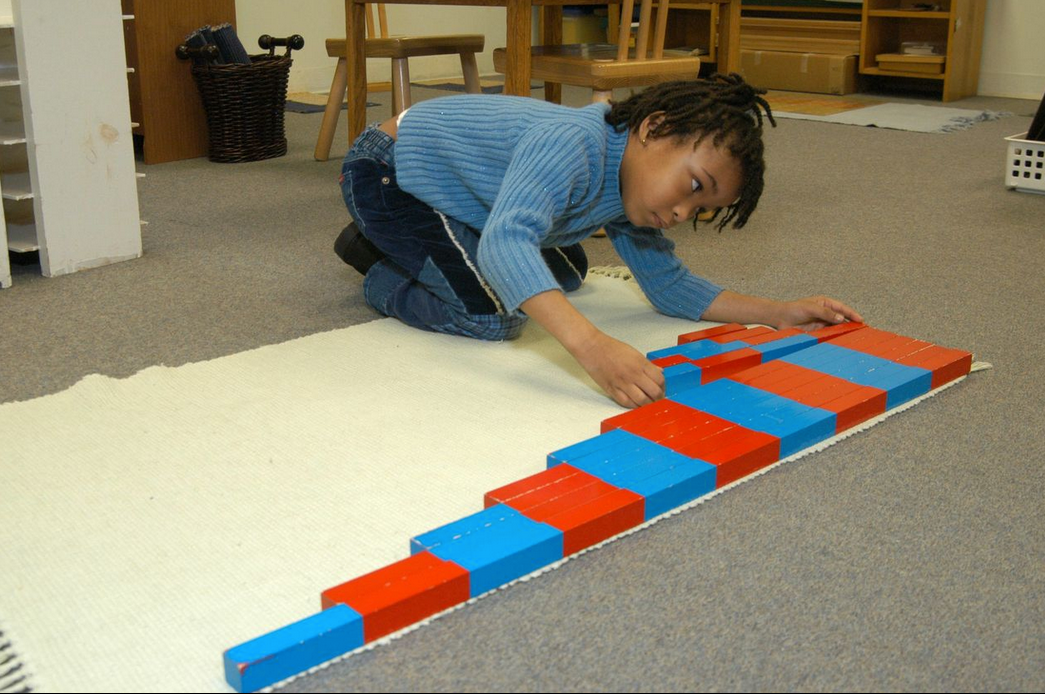 The vast majority of the resources and activities used at these centre
are non-ICT. The Montessori approach focuses on practical life skills type of activities
for the children. I found from my observations that children are engaged in
these Montessori activities/resources for a long period of time. Once they
master this activities the teachers guide them to the next stage of hand on
activities. This activities do challenge children to problem solve themselves,
develops their curiosity and social interactions skills amongst themselves and
the teachers.
The vast majority of the resources and activities used at these centre
are non-ICT. The Montessori approach focuses on practical life skills type of activities
for the children. I found from my observations that children are engaged in
these Montessori activities/resources for a long period of time. Once they
master this activities the teachers guide them to the next stage of hand on
activities. This activities do challenge children to problem solve themselves,
develops their curiosity and social interactions skills amongst themselves and
the teachers.
The majority of the resources in this are concrete resources in which
children can see, feel and touch. For example, In the Maths area we have
colored beads and Cuisenaire rods where children get to experience counting,
skip counting and linear counting. The Cuisenaire rod is made of wood rods of
varying color and lengths.
Benefits to the
children learning and development:
This makes Mathematics visible for the children where they can see,
feel and count. Mathematical manipulatives are frequently used in the first
step of teaching mathematical concept, which are of concrete representation
(The Centre for Guided Montessori studies, 2011). From my observation Children become very good
at traditional arithmetic when they are allowed to manipulate this Cuisenaire
rods overtime.
We also have the practical life skills corner, where children
practice, spooning, pouring, textures papers, writings, cutting, pasting, coloring
and drawing. This area focus particularly in the development and formation of
the hand. For example spooning grains. The purpose of this exercise is for
children to develop skills of spooning which helps them to feed themselves and
holding the pencil while drawing or writing which benefits them when they move
to primary school.

Benefits of these
to the children learning and development. 
This
exercise indirectly helps children in their eye hand coordination movement and
also develops their concentration. Practical life exercises also aid the growth
and development of the child’s intellect and concentration and will in turn
also help the child develop an orderly way of thinking (The Centre for
Guided Montessori studies, 2011).
Much
of the fine development skills in children comes from encouraging them in self
help task when interacting and engaging with life skills materials. As children
adept more on using utensils, pouring, drawing and cutting their ability to use
their hands and fingers grows (Gonzalez-Mena, & Eyer, D. W. 2014).
On
that note Te Whāriki mentioned within the exploration strand, children
exploring and engaging with different expressive technology such as textured
paper, drawing and the use of scissors develop understanding of how these types
of technology can be used to express their ideas and discoveries in creative
ways (Ministry of Education, 1996).
References:
Centre for Guided
Montessori studies, (2011). Montessori
primary guide. Retrieved from
http://www.infomontessori.com/practical-life/introduction.htm
Ministry of
Education. (2007). The New Zealand curriculum. Wellington, New Zealand:
Learning Media.
Ministry of Education (2005).
Foundations for Discovery: Supporting learning in early Childhood education
through information and communication technologies: A framework for
development. Wellington: Ministry of Education.
Ministry of Education (2008). Ka Hikitia. Managing for success: Maori
Education Strategy 2008-2012. Wellington: Ministry of Education.
Ministry of Education (1996). Te Whariki: He whariki matauranga mo nga mokopuna o Aotearoa: Early
childhood curriculum. Wellington: Learning Media.
National
Association for the Education of Young Children, (2012). Retrieved from http://www.naeyc.org/files/naeyc/file/positions/PS_technology_WEB2.pdf
Stephen, C. & Plowman,
L. (2013). Digital technologies, play, and learning. Early Childhood Folio,
17(2), 3-8.
Saturday, 13 June 2015
Monday, 1 June 2015
Monday, 2 March 2015
Subscribe to:
Comments (Atom)